
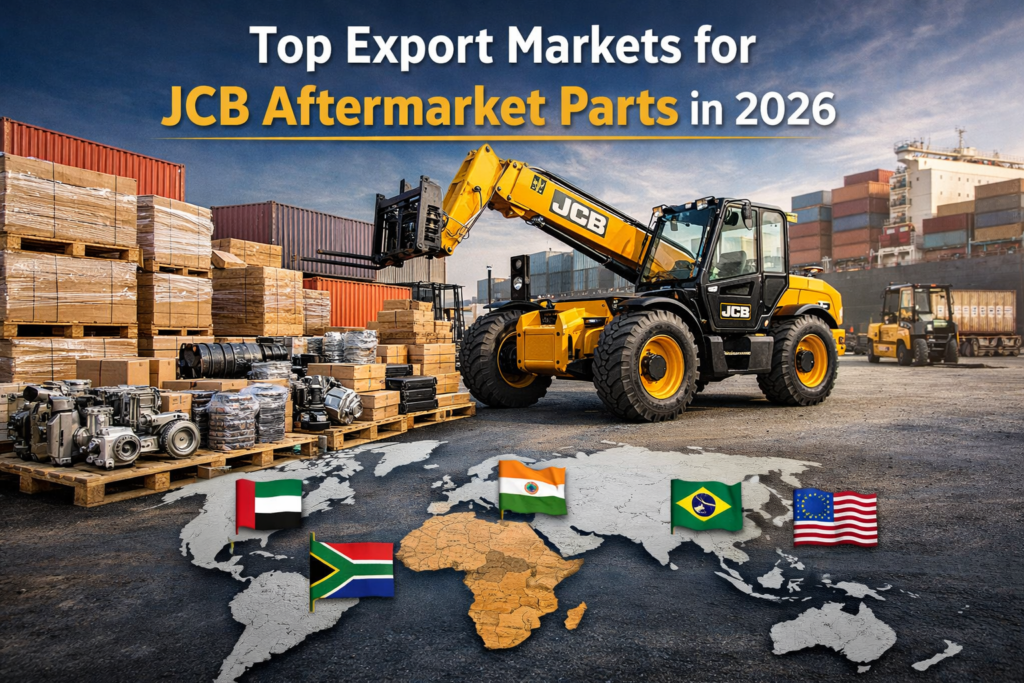
As construction and infrastructure projects recover unevenly across regions, 2026 is shaping up to be a year of selective demand for aftermarket JCB parts. Buyers are balancing uptime needs against budget pressures, creating opportunities for exporters who can deliver consistent quality, quick lead times, and clear export logistics. This article examines the top export markets for aftermarket JCB parts in 2026, why they matter, and what exporters should consider when targeting each region.
Middle East — Strong demand, high replacement rates
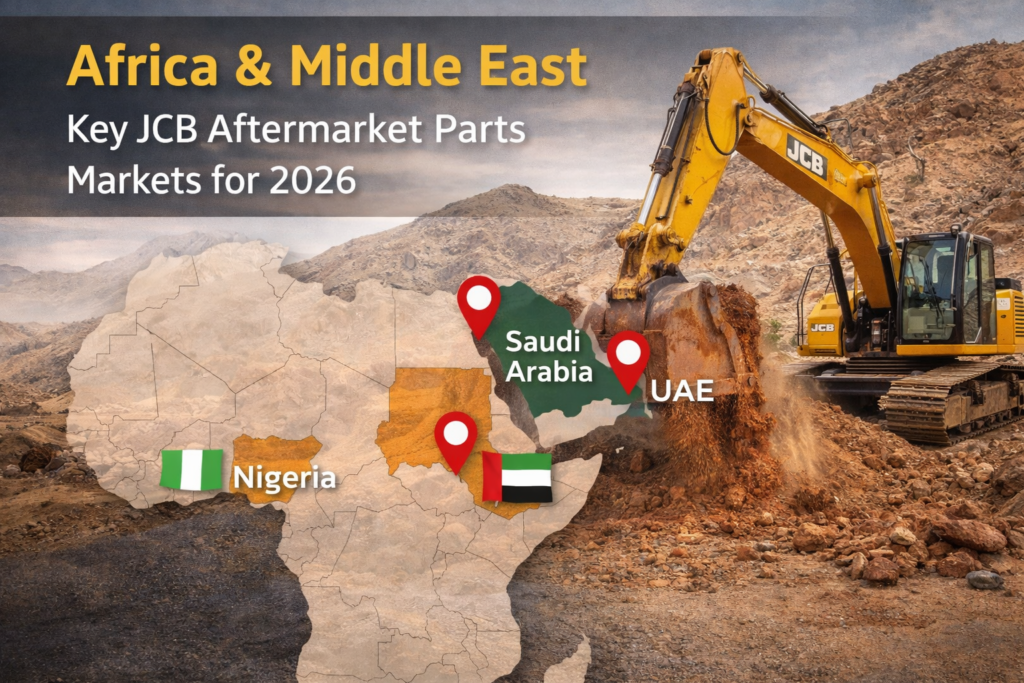
The Middle East (notably Saudi Arabia, UAE and neighboring countries) remains one of the top importers of JCB machines and components. Large-scale infrastructure, oil & gas maintenance, and rapid urban projects all keep fleets running — and that means steady demand for hydraulic parts, filters, electrical components, and wear parts. Recent trade flows and machine export data show Saudi Arabia and the UAE among the top destinations for JCB machines, which also drives parts demand in the aftermarket channel.
What exporters should do: prioritize regional distribution partners, offer expedited air-freight options for critical parts, and include clear documentation (commercial invoice, packing list, and HS codes) to speed customs clearance.
Africa — Replacement-heavy markets with local stocking needs
Across Sub-Saharan Africa and North Africa, JCB machines—often several years old—are workhorses on mines, farms, and construction sites. Older fleets create predictable, high-frequency demand for consumables and wear parts (bucket teeth, cutting edges, pins & bushes). Volza trade-data shows a wide geographic spread of JCB spare-parts imports, and many African distributors prefer aftermarket suppliers that can provide lower-cost alternatives and flexible MOQs.
What exporters should do: offer modular MOQs, durable packaging for long transit, and local after-sales support (tech sheets, installation guides) to win distributor trust.
Southeast Asia & South Asia — Fast replacement cycles + price sensitivity
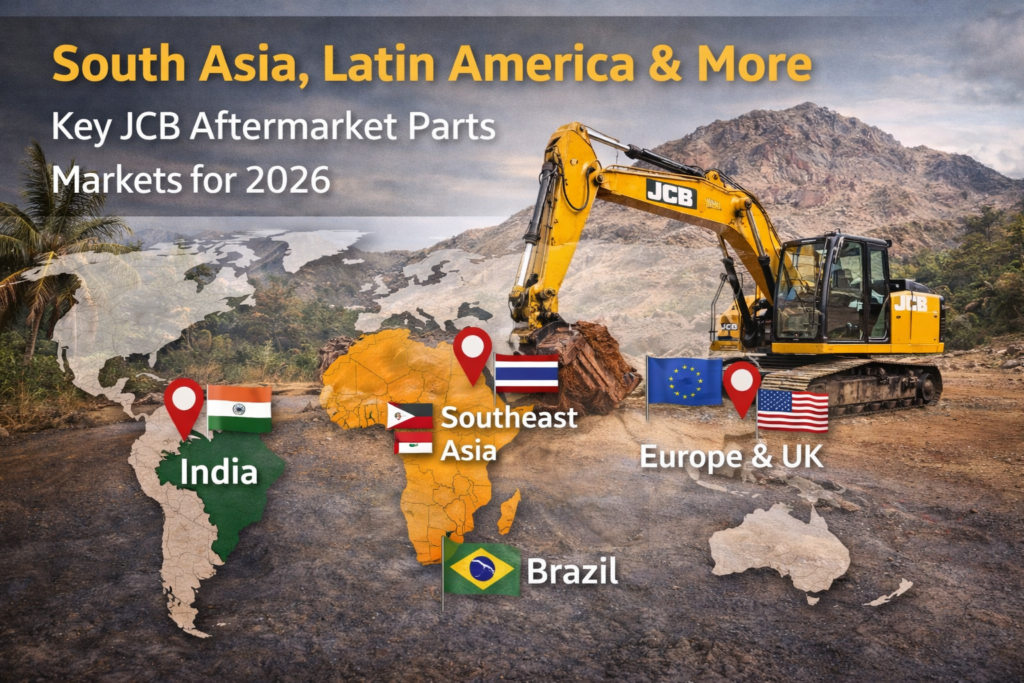
Southeast Asia and South Asia continue to be large markets for excavators and backhoe loaders. India itself is a major source and exporter of JCB machines and parts, but the region’s internal demand for aftermarket parts remains high because of intensive utilization and tight budgets. Regional market reports and manufacturing growth trends indicate these markets will remain crucial both for outbound exporters (who sell into nearby countries) and for local suppliers.
What exporters should do: ensure part compatibility lists (cross-reference OEM part numbers), offer competitive pricing tiers (standard vs premium aftermarket), and support local languages for product documentation.
Latin America — Rising mechanization, infrastructure push
Countries in Latin America—especially Brazil, Colombia, and Peru—are steadily increasing equipment mechanization in mining and construction. That shift produces rising demand for spare parts, particularly drivetrain components, engine parts, and hydraulic seals. Emerging infrastructure programs and mining activity often favor aftermarket suppliers who can supply large batches and provide quicker replenishment than long OEM lead times. Regional market overviews show consistent spare-parts opportunities here.
What exporters should do: establish bonded warehouses or local stocking agreements; provide compliance data for regional trade rules; and offer clear lead-time guarantees.
Europe & United Kingdom — Premium buyers, niche demand
Europe—including the UK—remains a market where quality and standards matter most. Buyers here will pay a premium for proven quality and regulatory compliance. The UK is also notable both as an importer and re-exporter hub for certain JCB parts. Trade data highlights the UK among significant destinations related to JCB parts flows. Suppliers that can demonstrate certification, traceability, and consistent quality will win here.
What exporters should do: maintain high QA documentation (material certificates, test reports), and be ready to supply small volumes promptly for aftermarket service networks.
North America — Selective but steady replacement demand
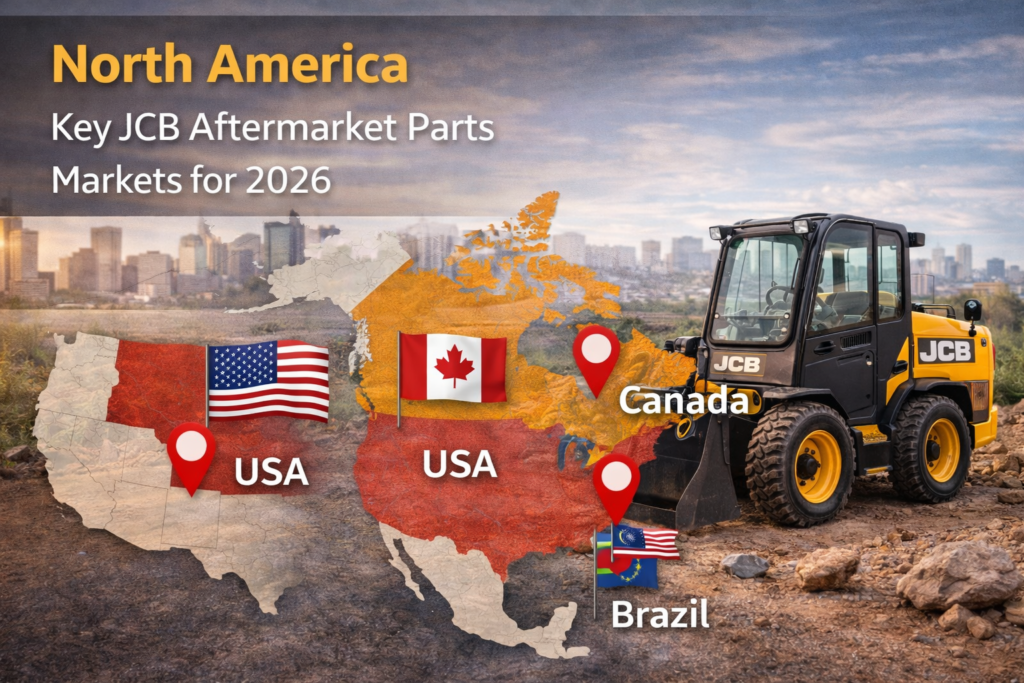
North America’s market for replacement parts tends to prefer OEM for critical systems, but there’s still a steady niche for aftermarket items—filters, wear parts, and some hydraulics—especially for independent contractors and smaller fleet owners. While OEMs and well-established aftermarket brands dominate, exporters that can match strict quality standards and supply chain transparency can access this market. Recent signals from OEM/industry activity also point to cautious spend in 2025–2026, which may influence parts purchasing behavior.
What exporters should do: meet North American regulatory expectations, provide UPC/part labeling, and consider working through established distribution partners.
Choosing Which Markets to Target: practical triage
When deciding where to focus your export efforts in 2026, weigh these three factors:
- Demand intensity — Are fleets old and heavy-use (higher aftermarket demand)?
- Price sensitivity vs quality expectations — Does the market prioritize cost or certified quality?
- Logistics complexity — How easy is customs clearance, and what are typical lead times?
Use that triage to segment parts SKUs: push high-margin, certified lines to Europe/UK; push volume wear parts and consumables to Africa, South Asia, and Latin America.
Final checklist for exporters targeting 2026 markets
- Map your top SKUs by region (wear parts to Africa/Asia, certified components to Europe/UK).
- Invest in clear cross-reference tools: OEM part number ↔ aftermarket SKU.
- Offer flexible MOQs and documented quality claims.
- Build partnerships with regional distributors and bonded warehouses.
- Offer digital catalogs and fast digital quote turnaround (buyers expect it).
Conclusion
2026 will reward aftermarket suppliers who combine product reliability, export-ready logistics, and region-specific go-to-market tactics. The Middle East, Africa, Southeast Asia, Latin America, Europe/UK, and selective North American niches all present strong opportunities—each for different reasons. By tailoring your product mix and trade approach to the realities of each market, exporters of JCB aftermarket parts can grow steadily and reduce downtime for buyers worldwide.